

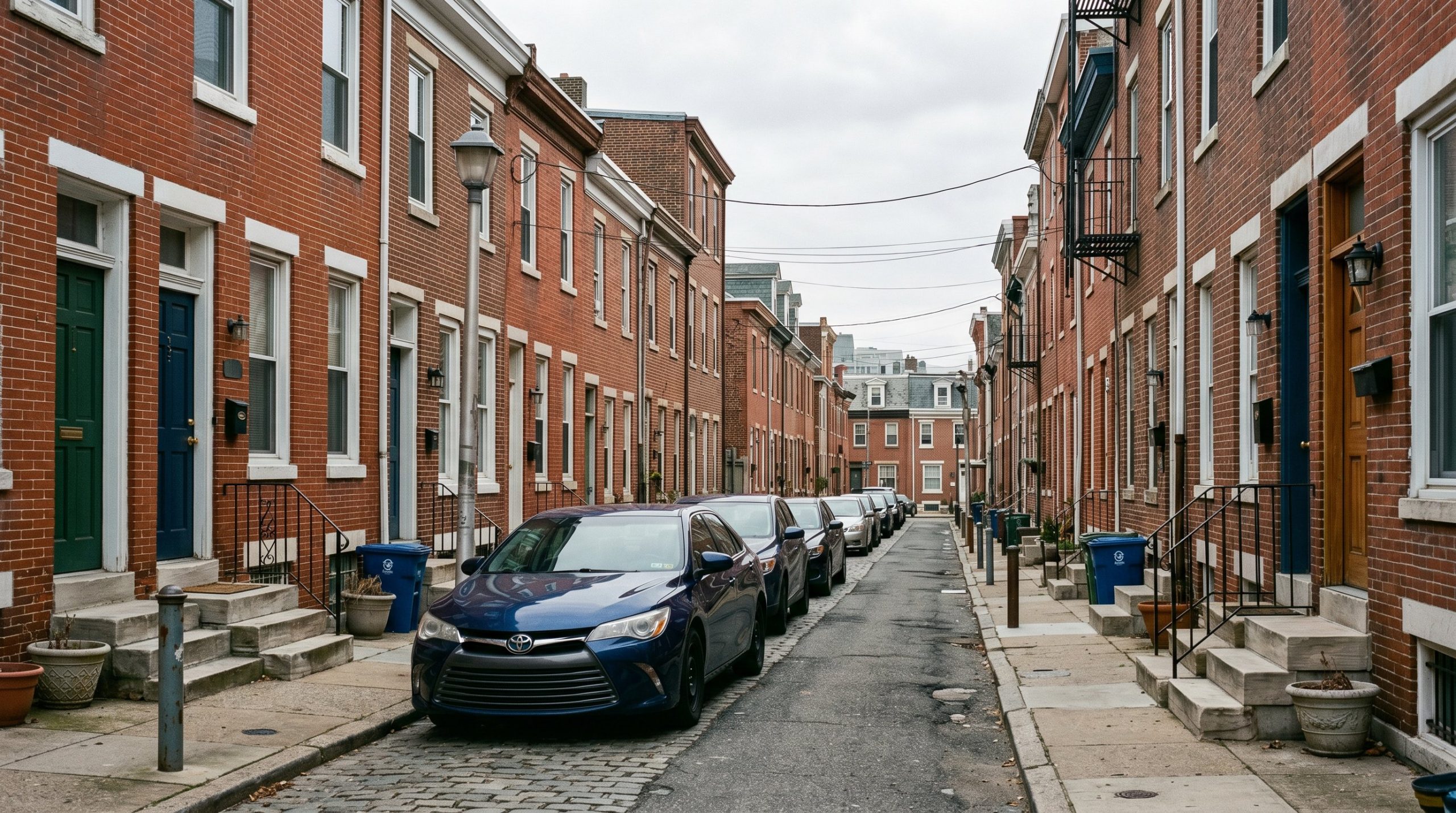
Philadelphia sits at the center of a dense Northeast corridor metro that stretches into New Jersey and Delaware. Like other older East Coast cities, it has neighborhoods where rowhouse living means street parking and limited space to show a vehicle, alongside sprawling suburbs where selling a car is more straightforward. The defining local factors for sellers are the four-season climate with real winters, the multi-state metro that crosses into New Jersey and Delaware, and a notable local quirk: Pennsylvania requires a notarized title transfer, which trips up sellers who are not expecting it.
This page covers the realistic options for selling a car in the Philadelphia metro, what makes the local market distinct, the Pennsylvania paperwork requirements including the notarization rule, and how the Clairvo process works for sellers across the region.
Free to use. No obligation. Competing offers from multiple licensed dealers across the Philadelphia metro.
Selling a Car in Philadelphia: The Three Real Options
Every Philadelphia seller is choosing among three basic paths, each with a different balance of price, speed, and effort.
Private Sale
A private sale typically produces the highest sale price. In Philadelphia, the experience varies by neighborhood: dense rowhouse areas with street-only parking make showing a vehicle and handling test drives a challenge, while the suburbs are more accommodating. Pennsylvania’s notarized title requirement adds a step that catches many private sellers off guard, since the title must be signed in front of a notary. Scam risk applies as everywhere, and winter weather can slow the private-sale market in the coldest months.
Single-Buyer Platforms
Carvana, CarMax, and similar single-buyer platforms produce one offer with no negotiation and handle pickup, which solves the parking and notarization logistics. The convenience is real. The limitation is that a single buyer’s offer is rarely the highest available because there is no competition. Our guide on selling to Carvana covers how the single-buyer model works.
Multi-Dealer Competition Through Clairvo
Clairvo routes your vehicle to multiple licensed dealers across the Philadelphia metro who bid competitively. You submit once, see competing offers, and choose the best one. Licensed dealers handle the notarization and title paperwork as part of the transaction, removing that friction while delivering the price benefit of competition. More on how Clairvo works.
What Makes the Philadelphia Used Car Market Different
Pennsylvania Requires a Notarized Title
This is the local factor most likely to surprise sellers. Pennsylvania requires the vehicle title to be signed in front of a notary or an authorized agent (such as a tag service or dealer) at the time of transfer. Skipping this step can void the transfer. For private sellers, this means coordinating a notary appointment. For sellers who go through a dealer, the dealer handles the notarization as part of their normal process, which is one reason dealer sales are popular in this market.
Four Seasons and AWD Demand
Philadelphia has a true four-season climate with meaningful winter snow and cold, which supports demand for AWD and 4WD vehicles, especially in the suburbs. AWD crossovers and SUVs tend to sell well heading into fall and winter. Convertibles and sporty vehicles are more seasonal, selling best in spring and summer.
Multi-State Metro
The Philadelphia metro crosses state lines into South Jersey (Camden, Cherry Hill) and northern Delaware (Wilmington). A buyer and seller in different states face different title and registration rules, which complicates private sales across the state line. Dealers handle cross-state transactions routinely, which simplifies things for sellers near the borders.
Road Salt and Winter Wear
Like other Northeast markets, Philadelphia road salt and winter conditions cause undercarriage rust and wear. Buyers check for corrosion, and a vehicle with minimal rust and documented maintenance stands out. Garage-kept vehicles command a premium in this climate.
What Philadelphia Sellers Need: Pennsylvania Paperwork Requirements
Pennsylvania has specific requirements for transferring vehicle ownership, including the notarization rule that distinguishes it from most states. Getting the paperwork right prevents delays and protects you from liability after the sale.
- Notarized title transfer: The title must be signed in front of a notary or authorized agent. This is Pennsylvania’s distinctive requirement and the one most likely to catch sellers off guard. The assignment section and odometer reading are completed at the notarization.
- Odometer disclosure: Required by federal law for most vehicles, completed on the title at the time of the notarized transfer.
- Bill of sale (Form MV-4ST or equivalent): Pennsylvania documents the sale through the title application process, typically handled by a tag service, notary, or dealer.
- License plate handling: In Pennsylvania, plates stay with the seller. Remove your plates before the sale and either transfer them to another vehicle or return them to PennDOT.
- Lien release if applicable: Documentation that any loan has been paid off and the lien released before the title can transfer cleanly.
Our broader guide on documents needed to sell a car covers the general requirements alongside these Pennsylvania specifics. Because of the notarization rule, selling to a dealer who handles the paperwork is often the simplest path in this market.
Philadelphia Metro Coverage: Neighborhoods and Surrounding Areas
Clairvo connects sellers with licensed dealers across the full Philadelphia metro, spanning Pennsylvania, New Jersey, and Delaware portions. Coverage includes:
- Philadelphia proper: Center City, South Philly, Northeast Philadelphia, West Philadelphia, and surrounding neighborhoods
- Pennsylvania suburbs: King of Prussia, Norristown, Doylestown, West Chester, Media, and the Main Line communities
- Bucks and Montgomery counties: Bensalem, Levittown, Lansdale, Abington
- South Jersey: Camden, Cherry Hill, Mount Laurel, Vineland
- Northern Delaware: Wilmington, Newark, and nearby communities
Because dealers across the metro can bid, sellers are not limited to whatever single dealer happens to be nearby. A seller in Philadelphia may receive a strong offer from a dealer in the suburbs or across the river in New Jersey who has specific demand for that vehicle.
How the Clairvo Process Works for Philadelphia Sellers
Step 1: Submit Your Vehicle Online
Enter your vehicle details (year, make, model, mileage, condition) through the Clairvo platform. The submission takes a few minutes from your phone or computer.
Step 2: Receive Competing Offers from Philadelphia-Area Dealers
Licensed dealers across the metro review your vehicle and submit competing bids. You typically see offers within 24 to 72 hours. Each offer is a real, binding number from a licensed dealer, not an estimate.
Step 3: Choose the Best Offer or Decline All
Review the competing offers on a single dashboard. Choose the one that works best for you, or decline them all with no obligation. There is no pressure and no cost to see what dealers will pay.
Step 4: Complete the Sale with the Accepting Dealer
Arrange to complete the transaction with the winning dealer, who handles the Pennsylvania notarization and title paperwork (or the equivalent New Jersey or Delaware process). Payment is typically same-day once the vehicle is verified.
Free to use. No obligation. See what multiple licensed dealers will pay for your car.
Why Competing Offers Matter More in a Market Like Philadelphia
Philadelphia’s notarization requirement and multi-state structure add friction to private sales that competing dealer offers eliminate. A dealer handles the notarized title transfer and any cross-state paperwork as routine business, while a private seller has to navigate it personally. Beyond the paperwork advantage, the seasonal AWD premium means a dealer with winter inventory needs will bid more for your AWD vehicle than one who is overstocked.
Competition surfaces the strongest offer while removing the paperwork burden. Multiple dealers bidding means the one with the strongest demand for your specific vehicle sets the price. Our guide on getting multiple dealer offers covers why competition consistently produces stronger pricing, and our guide on what your car is worth covers the valuation factors that matter most.
Selling Your Car in Philadelphia: Frequently Asked Questions
How long does it take to sell a car in Philadelphia?
Through a multi-dealer platform like Clairvo, you typically see competing offers within 24 to 72 hours and can complete the sale within a few days, with the dealer handling the notarized title transfer. A private sale takes longer and requires you to coordinate the notarization yourself. Single-buyer platforms like Carvana take a few days to a week including pickup scheduling.
Do I need to get the title notarized to sell my car in Pennsylvania?
Yes. Pennsylvania requires the vehicle title to be signed in front of a notary or authorized agent (such as a tag service or dealer) at the time of transfer. This is the requirement most likely to catch Philadelphia sellers off guard, since most states do not require it. Skipping the notarization can void the transfer. If you sell to a dealer, they handle the notarization as part of their normal process.
Are AWD vehicles worth more in Philadelphia?
Often, particularly in the suburbs. Philadelphia has a true four-season climate with meaningful winter snow, which supports demand for AWD and 4WD crossovers and SUVs, especially heading into fall and winter. Getting competing offers reveals what your specific vehicle commands across the metro’s dealers.
Can I sell my car across state lines in the Philadelphia area?
The Philadelphia metro crosses into South Jersey and northern Delaware, and a private sale across state lines means navigating two states’ rules, which complicates the transaction. Licensed dealers handle cross-state transactions routinely, so selling to a dealer is simpler if your buyer is in a different state. A multi-dealer platform lets dealers across all three states bid, and the winning dealer handles the paperwork.
Can I sell my car in Philadelphia if I still owe money on it?
Yes. If you still owe money, your lender holds the title and the loan must be paid off as part of the sale. Dealers handle this routinely: they pay off your lender directly and pay you the difference if your car is worth more than the payoff. Our guide on selling a car you still owe money on covers the process. Selling to a dealer is often simpler than a private sale when there is a loan involved, especially given Pennsylvania’s notarization requirement.
How much does it cost to use Clairvo to sell my car in Philadelphia?
Nothing. Clairvo is free for sellers. You submit your vehicle, receive competing offers from licensed dealers across the Philadelphia metro, and choose the best one with no cost and no obligation. If you decline all the offers, there is no charge. The platform earns through the dealer side of completed transactions, not from sellers.
Free to use. No obligation. See what your car is worth across the Philadelphia metro.