


How do you complete a private car sale online? Agree on a price with the buyer, verify their payment clears before handing over the car, sign and transfer the title, provide a bill of sale, remove your plates and cancel insurance, and report the sale to your DMV. Completing each step in order protects you from fraud and liability. Here is the full process.
A private sale can net a strong price, but it puts all the paperwork and payment risk on you. Doing it in the right order is what keeps you protected. If you would rather avoid the process entirely, we cover a simpler alternative at the end.
Agree on the price and terms
Settle the final number and confirm the buyer is ready to complete. Put the essentials in writing before you meet to finalize.
Verify payment before releasing the car
This is the step that protects you most. Confirm funds have actually cleared before you hand over the keys or sign the title. Never release the car on a promise or a pending transfer.
Sign and transfer the title
Complete the title transfer correctly for your state, including the odometer reading and sale date. An incomplete transfer can leave you liable for the car after it is gone.
Provide a bill of sale
A bill of sale documents the transaction for both parties and is required in many states. Include the sale price, date, vehicle details, and both signatures.
Remove plates, cancel insurance, notify the DMV
Take your plates if your state requires it, cancel or transfer your insurance, and file any release-of-liability notice so you are no longer on record as the owner.
The safer, faster alternative
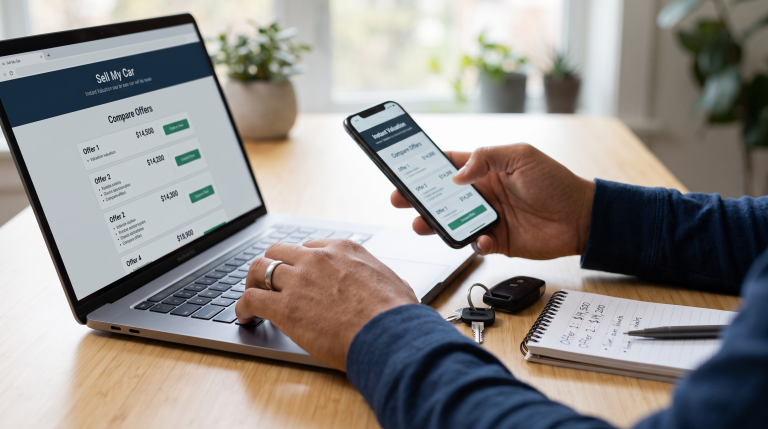
If verifying payment, meeting strangers, and handling title paperwork sounds like more than you want to take on, selling to a licensed dealer removes those burdens. The dealer handles the paperwork and payment, and competing dealer offers can bring the price closer to what a private sale would net without the risk. See selling privately versus to a dealer to weigh the tradeoff.
Frequently asked questions
What paperwork do I need for a private car sale?
At minimum, the signed title with odometer reading, a bill of sale, and any state release-of-liability form. Requirements vary by state, so check your DMV.
How do I avoid getting scammed in a private sale?
Verify that payment has fully cleared before releasing the car, meet in a safe public place, and never accept overpayment or pending-transfer schemes. See our guide to spotting scam buyers.
How do I transfer the title?
Sign the title over to the buyer with the correct odometer reading and sale date per your state’s rules, then file any required notice with your DMV so liability transfers.
Is a private sale worth the hassle?
It can net a strong price, but it carries payment, safety, and paperwork burdens. Competing dealer offers often come close on price with far less risk, which is why many sellers choose that route.